Trigger Warning:
This piece explores themes of sadness, grief, emotional suffering, and silent struggles, including references to loneliness, substance dependence, and the weight of carrying pain in isolation. If you are in a vulnerable place, please read with care and take breaks as needed. You are not alone—if you are struggling, please consider reaching out to someone you trust or seeking support from a professional resource.
The beauty of sorrow:
WHY IT MAKES US MORE HUMAN
Why Do We Like Sad Things? Understanding the Beauty in Sorrow
Have you ever sat with a song that hurts, letting it move something inside you that words alone never could? Have you ever seen a movie that just felt like a punch to the gut? You know, the kind where you go in expecting to be a little heartbroken, but you keep watching anyway? And somehow, that sadness doesn’t just nudge at you, it sinks so deeply into you. It’s a bit odd, right? The way we’re attracted to the sadness, the way it lingers within us, sticking around long after the joyful moments have faded.
We don’t just experience sadness, we lean into it. We seek it out, even when we know it will break us. Not because we enjoy pain, but because sadness is honest. It strips away the pretense, the noise, the masks we wear. In sadness, we are unguarded. We are real, and sometimes, for just a moment, that is where we find the most peace.
The Paradox of Sadness
Society teaches us to hide sadness, to bury it beneath forced smiles and half-hearted “I’m fine’s.” We are told that strength means silence, that happiness is the goal, and that suffering should be kept out of sight. But look closer, really look. The very people who push this belief are the same ones who escape into tragic stories, who drown themselves in songs that ache, who sit in the dark with their own quiet grief, wrestling tides of sorrow too vast for words, swallowed by storms only they can feel.
The world says sadness is weakness, yet we all carry it. It’s universal. It’s inevitable, and more than anything, it’s necessary.
Without sadness, joy is weightless. Without heartbreak, love remains shallow. Without loss, we don’t truly cherish what we have. Have you ever lost someone and felt the unbearable realization of how much they meant to you? Or held onto love so carefully after heartbreak because now, now you understand its fragility? That’s what sadness does. It shapes us. It slows us down and forces us to feel, to reflect, to appreciate.
Yet, we run from it. We treat sadness like something to be fixed or ignored rather than something to be understood. Tell me, if you keep running from sadness, where does it go? If you refuse to feel it, does it really disappear? Or does it linger beneath the surface, hardening, waiting, turning you numb? Because the truth is, in trying to escape pain, we blur the vibrancy of existence itself, muting life’s deepest beauty beneath the relentless static of a world that fears feeling. We rob ourselves of the richness, the weight, the meaning woven into every fleeting moment, trading depth for a hollow kind of survival.
The Artists Who Spoke Too Late
Some of the most powerful art in existence, the books that haunt us, the songs that break us open, the movies that leave us hollow, come from sadness. They are the voices of people who dared to say what the rest of the world is too afraid to admit. And the tragedy? Too often, we don’t listen until it’s too late. We mourn the voices that were silenced by their own exhaustion, only to find pieces of ourselves within their words. They carried the weight of existence alone, convinced no one would understand, and maybe, just maybe, all they needed was for someone to prove them wrong. Yet here we are, finding solace in the echoes they left behind, comforted by the very sorrow that once convinced them they were alone.
The poet whose words go unread until their name is etched onto a gravestone. The musician whose pain-filled lyrics become legendary only after they are gone. The artist whose suffering is acknowledged only when they no longer exist to be seen.
Why do we wait? Why do we recognize pain only in hindsight? Why do we dismiss the sadness of the living but honor it in the dead? Maybe because sadness forces us to confront something uncomfortable, our own fragility, our own buried grief, our own strength disguised as weakness, our own truth reflected back at us in ways we aren’t ready to face. It forces us to acknowledge the silent, severed connection we have to each other, and to a humanity that often feels distant, fractured, unreachable. So, we look away. Until we’ve suffocated beneath the weight of loneliness, heartache, and all that we refuse to face. Until the beauty we once recognized feels so distant, unreachable, as though it exists in a world we are no longer part of. Until we feel so lost and scared, standing at a crossroads where the weight becomes unbearable, where some decide it is not worth carrying at all, and others become so numb that nothing touches them anymore. Not the pain. Not the joy. Not the love or the loss. Just an existence dulled into indifference, where feeling nothing seems like the only way to survive.
The Funniest People Carry the Heaviest Weight
Think about the people who make you laugh the most. Those who bring light into every room, who are always there, uplifting everyone around, always smiling, laughing, and seemingly have the best time. Have you ever stopped to wonder why?
Sometimes, those who seem like the happiest, funniest, “always have a smile on their face” people are the ones who’ve known the deepest sorrow. They make others smile because they know the weight of silence, the unbearable loneliness of suffering we don’t see. They bring joy because they’ve walked through darkness and understand its weight, the kind of things that linger in the quiet moments when no one is watching. They fight to keep others from carrying the same invisible burdens, shielding the world from a pain they know all too well. They’re the ones who check on everyone, who lift others up, but who notices when they start slipping? Who sees past the laughter, past the deflections, past the carefully crafted illusion of being okay? Maybe it’s the uncle, the one you only ever see happy and drunk, seemingly the life of the party, yet attached to a bottle just to exist in the same realm as everyone else. You don’t see him sober, don’t see him alone in the dark, drinking himself into an early grave just to feel normal, just to make the weight bearable, just to quiet the noise of a world that never taught him how to carry his pain without drowning in it. Drowning in the very substance that momentarily revives the beauty of the world because without it, that beauty feels unreachable, like a memory fading in the rearview mirror, he is left alone with the raw, unbearable weight of everything he was never allowed to say.
Maybe you are that person, the one who is always strong for others, who has learned to bear the weight alone, who has mastered the art of appearing fine while breaking beneath it all. Or maybe you are the uncle, the one who fills the room with laughter, who seems weightless in the moment, but whose nights are long and heavy, whose solitude is drowned in something stronger than he is, just to make the world feel bearable for a little while. Have you ever stopped to ask yourself why? Why you never let the mask slip, why you carry it all without ever asking for help? Have you ever allowed yourself to set that weight down, even for a moment? Have you ever wondered what it would feel like to let someone else carry it with you?
Let Sadness Exist
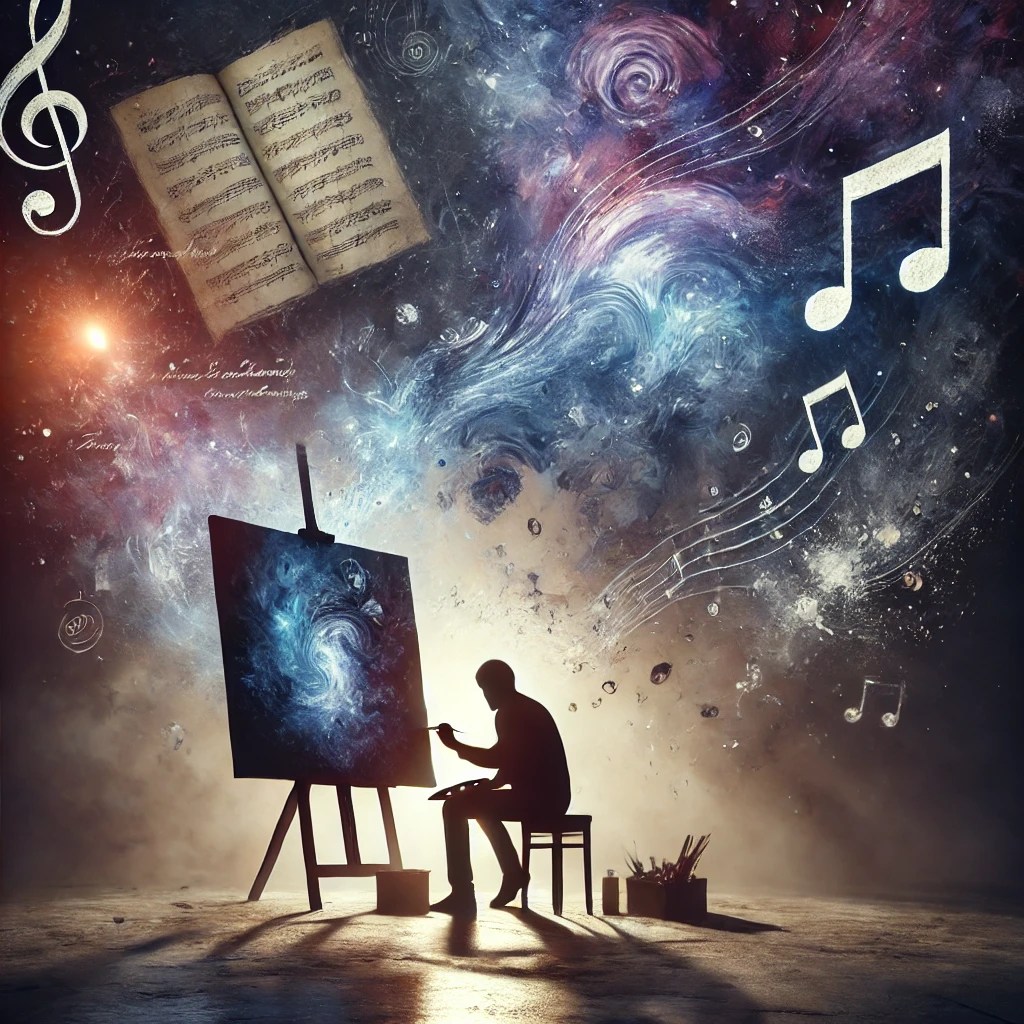
Sadness is not the enemy. It is not something to be fought away or silenced or feared. It is an unspoken language, woven into the very fabric of our existence, carrying the echoes of every love we have held and every loss we have endured. It is the pulse of poetry, the ink in every letter written to someone we miss, the brushstrokes of every painting that speaks without words. It is in the songs that bring us to tears, the stories that stay with us long after they end, the quiet moments when the weight of being alive settles into our bones and reminds us that we are here, that we are feeling, that we are human. It’s a teacher, a mirror, a reminder of everything that makes life worth living. When we stop running away from it, when we allow ourselves to sit with it, and truly feel it; it stops being something to fear and starts being something to understand. It becomes a bridge rather than a burden, a means of connection rather than isolation. It is the thread that ties us together in a world that so often tries to convince us we are alone in our suffering. It softens. It shows us the depth of our love, the weight of our experiences, the proof that we are alive.
So the next time you find yourself drawn to something sad, don’t turn away. Don’t smother it beneath forced happiness. Don’t apologize for feeling deeply. Instead, lean in. Let yourself feel it fully. Ask yourself- what is this feeling trying to tell me? What part of me is it speaking to? What truth is it showing me and asking me to stop ignoring? Maybe, just maybe, it’s because sadness isn’t just about pain, it’s about meaning. It’s about the songs we sing when words fail, the art we create when emotions are too big to express with words, the stories we share that remind each other we are not alone. It’s in the poetry of longing, in the raw honesty of a late-night Reddit confession, in the beauty of a tear-soaked face lit up by your phone. Sadness, pain, sorrow- it’s what makes us human. It is what makes our existence matter.
And that? That is not just something worth feeling, it’s something worth sharing. In sharing our sadness, in letting it be seen rather than swallowed, we remind each other that none of us have to carry it alone. And maybe, just maybe, that is the most beautiful thing of all.
 Alignment Pathways
Leave a comment